
Hopp
Hopp MobilityAuto & Vehicles
4.456.00 Reviews
- Version
- 9.9.0
- Installs
- 500.00K
- Age Rating
- Everyone
Screenshots


Our Review of Hopp
 Analysis by Appyee
I find Hopp most interesting when I think of it as a practical transport tool rather than another app that simply wants space on my phone. It belongs to the Auto & Vehicles category and is developed by Hopp Mobility, with a clear focus on greener, on-demand movement. In my experience, that makes its value depend less on entertainment or extra features and more on whether it fits the way I already travel.
The app is free to download, which removes the usual barrier to trying it. That does not mean every journey made through a transport service is automatically free, so I would separate the cost of accessing the app from the cost of using any mobility option presented through it. The free entry point is useful: I can install it, look around, and decide whether it suits my routine before committing to a new travel habit.
How Hopp fits into everyday transport
The basic appeal is convenience. Instead of treating a trip as something that must always be planned around a private car, a fixed timetable, or a long walk to a conventional transport stop, I can approach mobility more flexibly. That is especially useful for short urban journeys, last-mile connections, and occasions when my usual option is inconvenient.
A realistic example would be an evening when I have reached a larger transport hub but still need to cover the final part of the journey. A traditional taxi may feel excessive for that distance, while walking could take too long or be unpleasant with luggage. In that situation, an on-demand mobility app can be a sensible middle ground. I would check the available option, consider the overall journey rather than only the app itself, and use Hopp when the convenience justifies any applicable trip cost.
That last point matters because this is not a replacement for every transport method. If I am travelling at a busy time, carrying bulky items, moving with several people, or following a route already served perfectly by public transport, the ordinary alternative may remain simpler. Hopp is most useful when it solves a specific gap rather than when I force every trip through it.
The store summary presents the service as green transport on demand. I read that as the app’s central purpose: helping users consider a more flexible mobility choice when they need one. I would not treat that short message as a promise that every journey will be cheaper, faster, or more environmentally efficient than every alternative. The practical result still depends on the available service, the route, the timing, and the choices I make before starting.
The cost question is simpler than the travel decision
From an app-access perspective, Hopp is free. That makes it easy to test without paying for an app download, and it is a meaningful advantage over tools that place a purchase barrier before I can even inspect them. The important distinction is that free installation and free transport are not the same thing. I would look at the journey details shown in the app before confirming anything and judge the complete cost against walking, public transport, cycling, or a conventional taxi.
I also like that this approach keeps the decision in my hands. Someone who only needs occasional help with short trips can try the service without buying an annual subscription simply to gain access. On the other hand, a free app is not automatically good value if it rarely matches my routes. The real saving comes from finding situations where its convenience prevents a more expensive or time-consuming choice.
For a regular commuter, the right comparison is not just “free app versus paid app.” It is the total weekly travel pattern. If Hopp helps bridge a difficult connection and reduces the need for a private car or repeated taxi rides, it may earn a place in that routine. If a reliable bus, train, bicycle, or walking route already works, adding another mobility service may create more decisions without delivering enough benefit.
What I would check before relying on it
My first practical tip is to open the app before I am already late. On-demand transport is most useful when I have enough time to inspect the available choice, understand the route, and decide whether it fits. Opening it only after a missed connection or during a stressful rush makes any delay feel worse, even if the app itself is functioning normally.
My second tip is to compare the complete journey, not just the final leg. A short ride can look attractive in isolation, but the best option may still be a direct public transport connection. I would compare walking time, waiting time, transfers, luggage, and the likely cost before choosing. This is where Hopp can be valuable as a decision tool: it gives me another possibility to weigh rather than forcing me to abandon my normal planning habits.
A third useful habit is to keep a backup in mind. I would not make the app my only plan for an important appointment, airport connection, or time-sensitive event unless I had already learned how dependable the relevant service is in my area. On-demand transport is inherently more situational than a route I know runs on a fixed schedule. Having a nearby public transport route or taxi option in reserve makes the experience less fragile.
I would also pay attention to the phone itself. The app requires a compatible mobile device, and the current version is 9.9.0. It supports Android starting with version 7.0, so users with older devices should check compatibility before planning around it. That is a small detail, but it becomes important when the app is needed away from home and there is no time to troubleshoot an installation problem.
Where the app earns its place
The strongest value is flexibility. Fixed transport works beautifully when the route and timetable match my needs, but real journeys often include awkward gaps. A service designed around on-demand movement can be more useful for those gaps than for the main part of a trip. I see particular potential for short urban connections, occasional errands, and journeys where walking is possible in theory but impractical because of time, weather, or what I am carrying.
There is also a planning benefit. Even when I do not use the service, checking an additional mobility option can help me make a more informed choice. That does not make the app essential for everyone, but it gives it a role beyond a one-time download. For someone trying to reduce dependence on a private car, having another option available may make it easier to leave the car at home on selected trips.
The developer’s focus on transport rather than general lifestyle services also gives the app a clear identity. I am not opening it for unrelated content or a broad collection of distractions. I would use it with a specific question in mind: can this help me complete this journey more conveniently than the alternatives I have right now?
Its audience appears broad enough for general users because the content rating is Everyone. That is helpful for households where different people may need access to a transport tool, although the usefulness will still vary by location and personal travel patterns. A family that mostly travels together with lots of luggage may prefer a private car or a larger taxi, while a solo user making short trips may find the on-demand model more appealing.
The trade-offs I noticed
The first limitation is that flexibility can also mean uncertainty. A fixed bus route gives me a timetable I can plan around. An on-demand option asks me to check what is available at the moment I need it. That may be perfectly acceptable for casual travel, but it is less comfortable when punctuality matters. I would use Hopp confidently for a flexible errand sooner than for a journey with no margin for delay.
The second trade-off is comparison effort. The app may offer a convenient answer, but I still need to think about the alternatives. A transport choice that looks simple inside one screen can be less attractive once I include the walk to the pickup point, the time spent waiting, and the rest of my route. Hopp does not remove the need for judgement; it gives me another option that I must assess sensibly.
The third is that a free download does not settle the value question. If I use it only once and the journey does not improve meaningfully, the app has not delivered much practical value even though installation cost me nothing. Conversely, occasional use can be worthwhile if it avoids a much more inconvenient alternative. I would judge it by the problems it solves, not by the fact that it costs nothing to install.
I would also avoid assuming that a green transport label makes every individual decision automatically sustainable. The sensible comparison is the actual alternative for that trip. Replacing a solo car journey may feel very different from replacing a walk or an already available shared transport route. The environmental argument is strongest when the service helps me choose a practical alternative to a less efficient or less suitable journey, not when I use it without considering what I would otherwise do.
Who should try it, and who should skip it
I would recommend giving Hopp a try if you regularly deal with awkward last-mile journeys, variable schedules, or short trips where a private car feels unnecessary. It is also worth considering if you are actively looking for more flexible transport choices and want an app that is free to access before deciding whether it belongs in your routine.
It may be a particularly good fit for people who plan their journeys in stages. For example, I might use a train or bus for the main distance, then check Hopp for the final connection. That approach avoids expecting one service to handle the entire trip and makes the app’s flexibility work where it is most useful. It also gives me a clear fallback if the on-demand option does not suit the timing.
I would be more cautious if your travel is almost entirely predictable and already covered by a dependable public transport route. In that case, Hopp may be unnecessary rather than harmful. Users who need guaranteed capacity for large groups, frequent heavy luggage, or highly time-sensitive appointments may also prefer alternatives with which they already have a strong record of reliability.
People with older Android phones should check whether their device can run the app before depending on it. The minimum operating system is Android 7.0, which covers many older devices but not every phone still in use. iPhone users would likewise want to confirm that the version available for their device works as expected before making it part of an important travel plan.
My verdict after weighing the free access against the real use
Hopp is worth trying because the download is free and the idea is focused: provide a greener, on-demand transport option for journeys that do not fit neatly into fixed routes or private-car habits. Its best use is not as a universal replacement for buses, trains, walking, cycling, or taxis. I see it as an extra tool that becomes valuable when a particular trip has an awkward gap.
The app has built a substantial user base, with over 500 thousand installs, and its average rating is 4.4 from around 5 thousand ratings. Those figures suggest that many people find the service useful enough to keep and evaluate positively, while the rating should still be read as a broad signal rather than a guarantee that every route will suit every person.
My recommendation is therefore conditional but positive. Install it if you have a genuine need for flexible urban transport, then test it on a low-pressure journey rather than an important appointment. Compare the full trip with your usual alternatives, note how well it fits your schedule, and decide whether the convenience is repeatable. If it solves a recurring last-mile problem, the free app can offer real value. If your existing transport is already simpler and reliable, skipping it is perfectly reasonable.
For me, the deciding phrase is use Hopp when it fills a transport gap, not merely because it is available. That is where its free access, on-demand focus, and greener positioning come together in a practical way. It is a useful addition for the right journey, but not a reason to abandon every other way of getting around.
Verdict
Strengths of Hopp
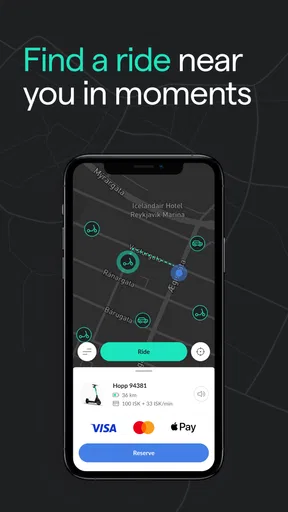
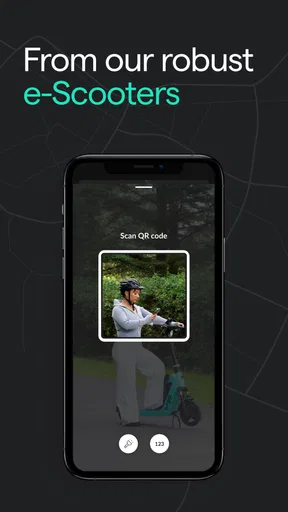
- Fast, simple scooter rentals for short urban trips.
- Helpful map shows nearby vehicles and parking areas.
- App makes unlocking and ending rides straightforward.
- Useful option for reducing car use in crowded city centers.
- Ride history helps track previous trips and spending.
Limitations of Hopp
- Availability can be limited outside busy areas or peak hours.
- Prices may increase with unlock fees, time, or local surcharges.
- You may need to park only in approved zones to end a ride.
- Scooter condition can vary depending on the previous rider.
- A stable internet connection and location access are usually required.
Similar Picks in This Category
View All
Android Auto
Google LLC4.1

maxim — order a taxi & food
PT. SITO4.7

Штрафы ГИБДД: проверка с фото
Pays LLC – Штрафы ГИБДД4.7

Номерограм – проверка авто
Авто Ассист4.8

Дром Авто
Дром4.9

Frequently Asked Questions
What is Hopp and what can I use it for?
Hopp is a mobile application designed to help users discover and interact with available services through a convenient smartphone interface. Depending on the version and region, it may provide access to bookings, offers, local activities, or other app-specific features. Before downloading, check the official store description because available functions can vary by country, device, and account type.
Is Hopp free to download and use?
Hopp can generally be downloaded without an upfront charge, but some features, bookings, products, or services accessed through the app may require payment. Additional costs could include taxes, service fees, subscriptions, or charges from third-party providers. I recommend reviewing the pricing details shown inside the app and reading the terms before confirming any transaction.
Is Hopp available for both Android and iPhone?
Hopp may be available for Android and iOS, although compatibility depends on the specific app version, operating system, and location. Before installing it, verify that your phone meets the minimum requirements listed on Google Play or the App Store. If the application does not appear in your region, availability may be restricted by local publishing or service policies.
Does Hopp require an account or personal information?
Many of Hopp’s functions may require users to create an account, sign in, or provide information such as an email address, phone number, name, or payment details. The exact requirements depend on which features you use. Before registering, review the app’s privacy policy and permissions so you understand how your information may be collected, stored, and shared.
Is Hopp safe and reliable to use?
Hopp should be downloaded only from an official app store or a verified source to reduce the risk of installing a modified or unsafe version. Check the developer name, recent reviews, update history, and requested permissions before proceeding. As with any service app, avoid sharing unnecessary sensitive information, use a strong password, and contact official support if you notice suspicious activity.
